Last updated November 18, 2026





Free written scope consultation - allowances, timeline, and change-order rules on paper before a single trade is scheduled
DIY vs Professional Windows & Doors: What’s Safe to Do Yourself
Replacing a window with the same-size unit sounds like a one-Saturday job. Then you find out that in California, a “like-for-like” replacement still triggers a Title 24 energy compliance check the moment you pull a permit, and you’re pulling a permit the moment you touch the frame. That gap between what looks simple and what the code actually requires is where most San Jose homeowners get surprised. This guide draws a hard line between the window and door work you can safely do yourself and the work that needs a licensed crew, a permit, and an inspector’s signature. By the end you’ll know exactly which side of that line your project falls on.
Quick Answer
Safe DIY window and door work means everything that leaves the frame and opening untouched: swapping hardware, painting trim, replacing weatherstripping, adjusting hinges, caulking, and re-setting a threshold. Anything that changes the frame, the opening size, the header, the glass unit, or the rough opening is permit-required work in San Jose that needs a licensed installer, a Title 24 compliance check, and inspection. Interior cosmetics are yours to handle. Structural and energy-code work belongs to a pro.
Styles & brands we work with
- Kitchen remodeling
- Bathroom remodeling
- Home additions & ADU
- Roofing
- Windows & doors
- Driveway & pavers
- Fence
Table of Contents
- What Triggers a Permit in California
- The DIY Tasks With Zero Permit Risk
- Why Window Installs Are a Top Callback Category
- What Voids a Manufacturer Warranty on Day One
- The Honest Cost Comparison
- San Jose Climate, Code, and Market Notes
- Common Mistakes to Avoid
- When to Call a Professional
What Triggers a Permit in California
California doesn’t treat all window and door work the same. The permit threshold depends on what you’re actually changing. Here’s how it breaks down, and knowing these lines is the difference between a clean project and a red-tag from the city.
- Same-size, same-type replacement (frame in, frame out): Pulls a permit in most California jurisdictions, including San Jose. A permit means a Title 24 energy compliance check on the new unit’s U-factor and SHGC ratings. Skip the permit and you inherit an unpermitted alteration that surfaces at resale.
- Changing the opening size: Permit required, plus structural review if the header or jack studs change. Widening a bedroom window is not a swap; it’s a structural event.
- New opening in an existing wall: Full permit, structural review, and inspection of the header, framing, flashing, and waterproofing. This is the most regulated category and the one most often fudged by weekend installers.
- Interior trim, hardware, weatherstripping, threshold adjustment: No permit. No Title 24 check. Fully yours.
The rule of thumb we give San Jose homeowners: if the new unit slides into the existing frame without opening the wall, you’re probably permit-exempt in practice for the trim work. The moment the frame comes out, you’re into permit territory, and Title 24 rules come with it. The permit inspector works for you, not for the contractor – that’s why we like him. Every eligible Barrett & Sons job includes permits pulled and inspections signed, and that paper trail is the thing that protects you at resale.
The DIY Tasks With Zero Permit Risk
Plenty of window and door work is genuinely safe to do yourself, and doing it well saves real money. Here’s the list we hand to homeowners who ask what they can tackle before calling us.
- Interior casing and trim. Replacing or painting the interior trim around a window or door is cosmetic. No permit, no structural implication, and a careful homeowner with a miter saw does fine work.
- Hardware replacement. Handles, locks, hinges, door knockers, and deadbolts swap out easily. Match the existing mortise and backset and you’re done in an hour.
- Weatherstripping. Worn weatherstripping is the number one source of door drafts. A $15 roll and an afternoon fixes it.
- Threshold adjustment. If your exterior door drags or leaks under the threshold, the adjustable saddle and sweep can be re-set or replaced without touching the frame.
- Caulking and sealing. Re-caulking around exterior trim and interior stops keeps water out and stops air infiltration. Do it before the rainy season.
- Painting and staining. Doors and window trim take paint like any other wood surface. Prep matters, but the work is straightforward.
- Screen replacement. Re-screening a window or door is a skill, not a permit item.
In San Jose, that list covers most of what homeowners actually want done. The trim, the hardware, the weatherstripping – all yours. The frame, the glass unit, the flashing – not yours, and we’ll get to why.
Why Window Installs Are a Top Callback Category
Window installation is one of the highest callback categories in residential construction, and the reason is almost never the window. It’s the flashing detail behind it. The flashing is what channels water out from behind the unit and down the wall assembly. Get it wrong and the window looks perfect on day one. Water finds the gap, the sheathing soaks, and by year two you’re looking at rot, mold, and a repair that costs more than the original install.
Most DIY installs fail in exactly this spot. The unit gets set plumb and level, screwed in tight, and trimmed out nicely. The flashing tape gets skipped or applied backward, the sill pan is missing, and the weather barrier isn’t lapped correctly. None of that is visible from inside the house. All of it shows up in year two during the first real storm. In San Jose we see this after the atmospheric river seasons – a stretch of heavy rain and the phone rings with water stains on interior drywall that trace back to a window put in three or four years earlier. By the time the homeowner calls, the damage is well past the window itself.
Flashing is not a mysterious trade, but it’s a sequence, and getting the sequence wrong is invisible until it isn’t. A trained installer knows the sill pan goes down before the unit, the weather barrier laps over the nailing flange, the tape overlaps in the right direction, and the whole assembly sheds water instead of trapping it. That sequence, done right, is what keeps the window dry for twenty years.
What Voids a Manufacturer Warranty on Day One
“Manufacturer’s installation requirements” is a phrase that shows up in every window and door warranty document, and most homeowners gloss over it. It matters, because a warranty that’s void on day one is no warranty at all. Premium brands like Andersen and Marvin write their warranties around specific installation steps, and skipping any of them can void the glass unit and the frame coverage before the unit is even out of the box.
The steps most DIY installs skip:
- Sill pan installation. Required by most manufacturers and skipped by most DIYers. A missing sill pan voids water intrusion coverage.
- Correct flashing tape and sequence. Manufacturers specify the tape type and the lap direction. Wrong tape or wrong direction voids the weather-tightness warranty.
- Shim placement and fastener schedule. Jacking screws through the frame at the wrong point can crack the frame or stress the glass. Manufacturers specify where fasteners go and where they don’t.
- Square and level within tolerance. Out-of-tolerance installs stress the sash and void the operating warranty.
- Air sealing per spec. Expansion foam in the wrong gap or the wrong formulation can bow the frame and void coverage.
When a manufacturer’s rep looks at a warranty claim, they check these steps. If the documented install doesn’t match their requirement, the claim gets denied. A licensed installer with a manufacturer relationship has the documentation and the training to keep that warranty intact – and if something goes wrong in year three, that relationship is what gets the unit replaced instead of a bill handed to you.
The Honest Cost Comparison
Here’s the part nobody tells you at the big-box store: the window you buy across the counter and the window a contractor buys through a supply account are often the same product at different line-item prices, and the difference is what buys you the installation warranty. Contractor supply accounts get pricing a walk-in customer can’t access, so the unit cost can come in lower through a contractor even before installation. The markup homeowners see on a contractor’s bid isn’t always markup on the window – it’s the labor, the flashing, the permit, the inspection, and the warranty that carry the load.
A fair comparison looks like this:
- Big-box purchase: Lower unit price on paper, but you assemble the flashing, the sealant, the permit, the inspection, and the labor yourself. No install warranty. Manufacturer warranty coverage is on you to preserve.
- Contractor purchase: Unit price through a supply account, plus documented installation, permit pulled, inspection signed, and the contractor’s own guarantee on the labor.
- What the markup actually buys: A written scope, a permit that protects you at resale, an inspection, the flashing done right, and someone to call if water shows up in year two.
For a single interior door hardware swap, DIY wins on price and there’s nothing to lose. For a full window replacement across a San Jose ranch home, the DIY savings evaporate the first time you have to redo the flashing. If you’re weighing a larger scope like a full exterior package, our Barrett & Sons Construction San Jose home page lays out how we handle the permit and inspection side, and our sister pages on Driveway & Pavers in San Jose and Fence Installation in San Jose show the same paper-trail approach on outdoor work.
San Jose Climate, Code, and Market Notes
San Jose sits in a mild climate, which fools a lot of homeowners into thinking window work is simpler here than elsewhere. The mildness cuts both ways. We don’t get the freeze-thaw cycles that tear apart installs in the mountains, but we do get concentrated rain in short windows, and that’s when bad flashing fails. The first atmospheric river of the season is when we see the callbacks from installs done two or three years earlier. Homes in the older neighborhoods around Willow Glen, Rose Garden, and the Alameda carry original single-pane units that haven’t been touched in fifty years. Swapping those to dual-pane is a real energy win, but the rough openings in those homes are rarely square and the wall assemblies are often stucco over older sheathing. The flashing detail matters more there, not less.
On the code side, San Jose follows the state’s Title 24 energy requirements, and a permitted window replacement means the new unit has to meet U-factor and SHGC limits for our climate zone. Buy the wrong unit off the shelf and it can fail the compliance check even though it looks identical to the old one. That’s the trap: the unit fits, but the numbers don’t comply. Pulling the permit and having the compliance documentation done right is the entire point of the exercise.
On the market side, unpermitted window and door work shows up in disclosures and appraisals. San Jose buyers and their agents ask. An unpermitted replacement is a negotiating chip in the buyer’s favor or a stalled close. A permitted one is a documented improvement. If your project grows into something bigger – a new opening, an addition, a primary suite bump-out – our Home Additions & ADU in San Jose page is the place to start, because those projects inherit the same permit discipline from day one.
Common Mistakes to Avoid
- Skipping the sill pan because the old window didn’t have one. The old window probably leaked too. A sill pan is required by most manufacturers and it’s the cheapest insurance on the whole job.
- Assuming “same size” means “no permit.” In San Jose, a frame-out replacement still needs a permit and a Title 24 check. This is the single most common assumption we correct.
- Buying the window before checking the compliance numbers. A unit that fits but fails U-factor or SHGC for our climate zone can’t pass inspection. Match the numbers first, buy second.
- Applying flashing tape backward or skipping the weather barrier lap. The tape has a direction, and the barrier laps over the flange, not under it. Get the sequence wrong and water finds the gap.
- Foaming the whole gap with expanding foam. Over-expanding foam can bow a frame and void the warranty. Manufacturers specify the foam type and the fill amount, and “more” is not better.
- Replacing a door without checking the threshold and sweep. A door that closes but leaks at the bottom is still a failed install. The threshold detail is where most DIY door jobs fall short.
- Not documenting the install. Photos of each flashing step and the fastener placement are what a manufacturer’s rep asks for on a warranty claim in year three. No photos, no coverage.
When to Call a Professional
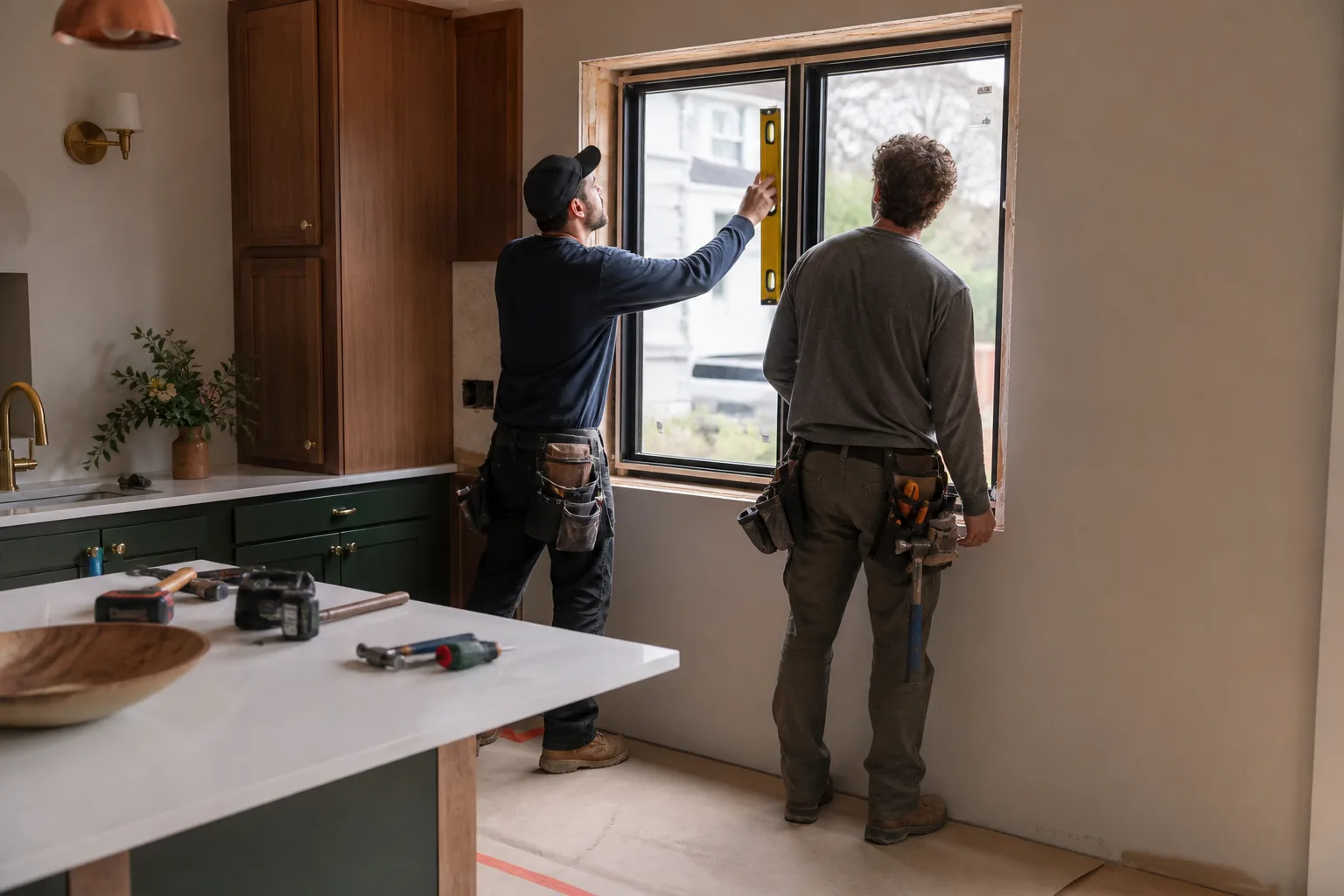
Call a professional the moment your project crosses from cosmetics into the frame, the glass unit, the opening, or the header. That includes any full window replacement, any door replacement that changes the rough opening, any new opening in a wall, any project where the permit is required, and any unit where you’re relying on the manufacturer’s warranty to hold. Also call if you’ve inherited a DIY install that leaks, if you’re seeing water stains near a window after a storm, or if a previous contractor told you permits were optional. Barrett & Sons Construction San Jose offers free estimates in San Jose – call (844) 320-5918. We pull the permits, we get the inspections signed, and every price change arrives as a written change order before work proceeds. Our crews have up to 28 years of experience, and every completed job is backed by our written 90-Day Done Right Promise.
See the difference
 Before
 After
 Before
 After
 Before
 After
Frequently Asked Questions

Yes, in most cases. A frame-out replacement in San Jose requires a permit, and a permit brings a Title 24 energy compliance check on the new unit’s U-factor and SHGC ratings. Interior trim, hardware, and weatherstripping do not require a permit. If you’re unsure which side of the line your project is on, call (844) 320-5918 – estimates are free, and we’ll tell you straight.
Sometimes on paper, but rarely in practice. A contractor’s supply-account pricing is often lower than a walk-in retail price, and the contractor carries the installation warranty, the permit, and the inspection. The “cheaper” DIY route often costs more the first time flashing fails. Call (844) 320-5918 for an exact quote – estimates are free.
Flashing. The unit gets set plumb and the trim looks clean, but the flashing tape, sill pan, and weather-barrier lap get skipped or applied in the wrong sequence. Water gets behind the unit and shows up as interior damage in year two. It’s invisible until it isn’t, which is why it’s the top callback category in residential construction.
It can, and often does. Manufacturers like Andersen and Marvin write their warranties around specific installation steps – sill pan, flashing sequence, shim placement, fastener schedule, and air sealing. Skip any of them and a warranty claim can be denied before you’ve had the unit a year. A licensed installer documents those steps and keeps the warranty intact.
Interior casing and trim, hardware replacement, weatherstripping, threshold adjustment, caulking, painting, and screen replacement are all safe DIY work with no permit risk. Anything that opens the frame, changes the rough opening, or moves the header needs a licensed crew and a permit.
Yes. Every eligible Barrett & Sons job includes permits pulled and inspections signed. The permit inspector works for you, not for us – that’s the point of the exercise, and it’s what protects you at resale. Call (844) 320-5918 to schedule your free estimate.
The Bottom Line
Window and door work splits cleanly into two halves. The DIY half is real: trim, hardware, weatherstripping, thresholds, caulking, and paint are yours to handle, and doing them well saves money. The permit half is the frame, the glass unit, the opening, and the header, and in San Jose that half comes with a permit, a Title 24 compliance check, and an inspection whether you like it or not. The flashing detail is where DIY installs fail, invisibly, until year two. The manufacturer warranty is where they fail on day one. Know which half you’re in before you pick up a tool. If it’s the permit half, call a licensed crew and get it done right the first time.
Get a Free Estimate
If your window or door project crosses into permit-required work, call Barrett & Sons Construction San Jose at (844) 320-5918 for a free estimate. We’re an owner-operated company serving local communities for over 29 years, and we answer the phone with a live person 24/7. Every scope, every allowance, and every price change arrives in writing before work happens, because the allowance that isn’t on paper is a surprise waiting for a date. Premium brands like Andersen and Marvin go in on our jobs, permits get pulled and inspections get signed, and every completed job is backed by our written 90-Day Done Right Promise. Ask anyone on your street – or look up the license number yourself – then call (844) 320-5918. New customers can take $40 off any repair over $200, get a free second opinion on any written estimate, and skip the trip charge inside the county, with a permanent 10% Senior & Veteran discount on top.
Written by the team at Barrett & Sons Construction San Jose.